About Dr. Eric Whitney — Neurosurgeon & Author
Dr. Eric Whitney, DO
Board-Certified Neurosurgeon • Published Researcher
Dr. Eric Whitney is a board-certified neurosurgeon practicing in Southern California. He completed his neurosurgical residency at Arrowhead Regional Medical Center and Desert Regional Medical Center, earned his Doctor of Osteopathic Medicine from Liberty University College of Osteopathic Medicine, and holds board certification from the American Osteopathic Board of Surgery in Neurosurgery.
Over years of clinical practice, he noticed a consistent pattern: patients who had excellent surgical outcomes were still struggling — emotionally, cognitively, and existentially — in ways that no one had prepared them for. The conversations that should have happened before surgery were happening for the first time in his office, months or years later. Patients described changes so subtle and so isolating that they had never spoken about them to anyone — not their spouse, not their therapist, not their surgeon.
Personal
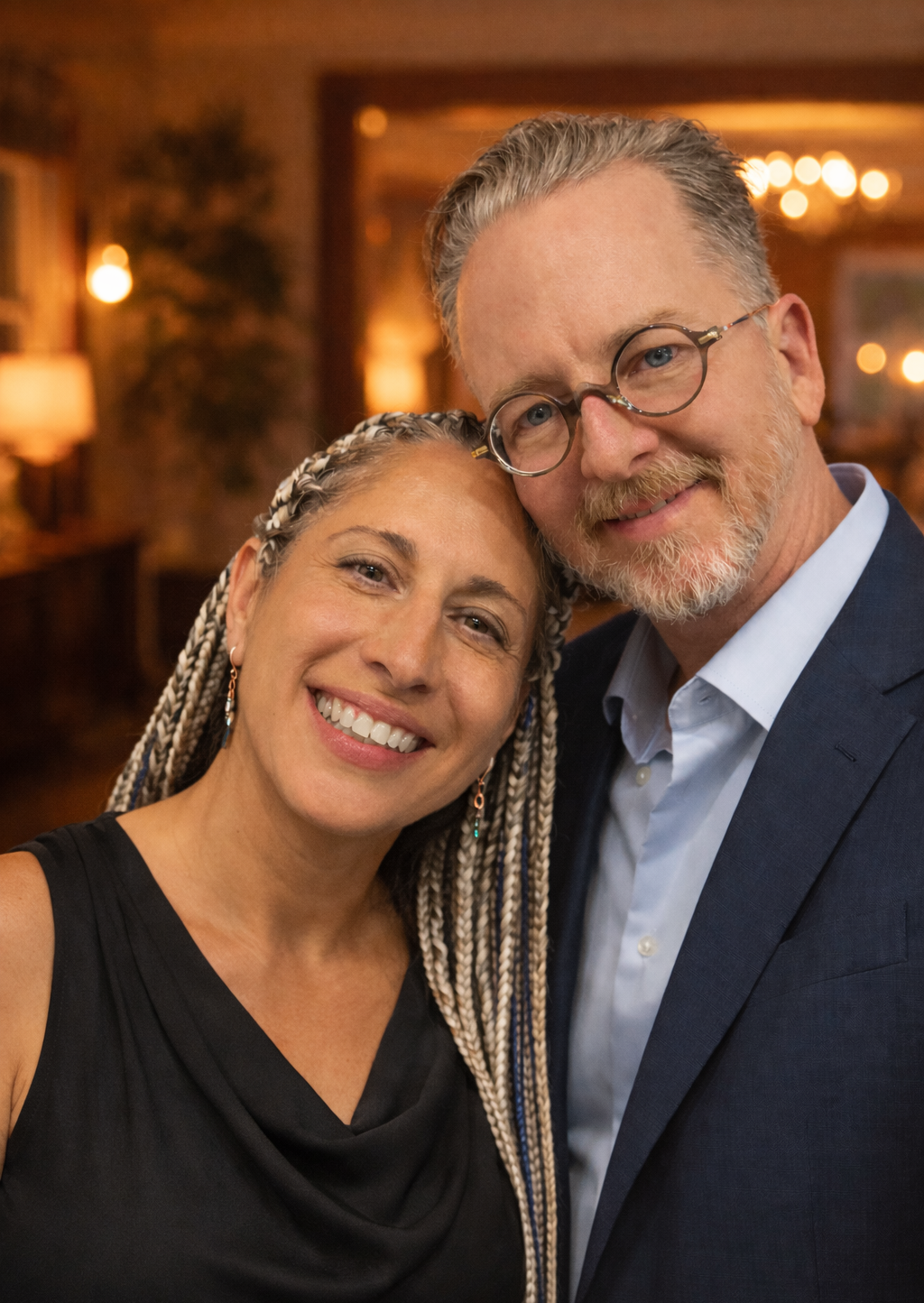
Outside the operating room, Dr. Whitney is a husband and father. He is married to Dr. Paris Whitney, a longevity and concierge executive medicine physician, and together they share a life shaped by medicine, family, and a mutual commitment to helping people live well. He is also a father of four children. Life is complicated, and some of the most important relationships are also the most difficult — a reality he carries with him in the work he does with patients navigating their own changed lives.
A Non-Traditional Path
Before medicine, Dr. Whitney lived several lives. He spent seven years in Buenos Aires, Argentina as a missionary and pastor, becoming fluent in Spanish. He founded a software company specializing in online education. He worked as a natural gas and crude oil trader, market analyst, and risk manager in the energy sector. These experiences — building businesses, navigating volatile markets, serving communities across cultures and languages — shaped the way he practices medicine: with an awareness that patients are whole people, not just diagnoses.
That non-linear path is part of why this project exists. A surgeon who has only ever been a surgeon might not notice the gap between a successful operation and a patient who no longer feels like themselves. Dr. Whitney noticed it because he has experienced what it means to rebuild an identity more than once.
Research and Publications
Dr. Whitney has authored and co-authored peer-reviewed research across neurosurgical topics including traumatic brain injury outcomes, cerebral aneurysms, deep brain stimulation, contrast extravasation after thrombectomy, and the healing effects of music and binaural beats on neurological injury. His publications appear in Cureus and StatPearls, and he has contributed to institutional research on neurosurgical outcomes in severe TBI.
His current research focuses on emotional recovery after neurosurgery — a narrative literature review synthesizing 28 peer-reviewed sources into a three-dimensional recovery framework addressing neurobiological, psychological, and existential dimensions of post-surgical change. That work is currently under review at Cureus and forms the clinical foundation for this website.
Selected Publications
Whitney E, Wang JY, Haslett J, Ramnot A, Siddiqi J. Healing Effects of Music, Healing Frequencies, and Binaural Beats for Traumatic Brain Injury and Stroke: A Review. Cureus. 2026;18(2):e104261.
Richardson DL, Whitney E. Deep Brain Stimulation: Overview and Applications in the Context of Neuropsychiatric Conditions. Cureus. 2025;17(10):e93661.
Rice-Canetto TE, Ueno A, Whitney E, et al. A Review of the Current Literature on Cerebral Aneurysms. Cureus. 2025;17(3):e80223.
Whitney E, Kiessling JW, Reier L, et al. Non-traumatic Spontaneous Paraplegia Secondary to Thoracic Disc Herniations in the Setting of Tobacco Abuse and COVID-19. Cureus. 2022;14(11):e31544.
Whitney E, Khan YR, Alastra A, et al. Contrast Extravasation Post Thrombectomy in Patients With Acute Cerebral Stroke: A Review. Cureus. 2020;12(9):e10616.
Whitney E, Mahato D, Odell T, Khan YR, Siddiqi J. The 100-most Cited Articles About Craniectomy and Hemicraniectomy: A Bibliometric Analysis. Cureus. 2019;11(8):e5524.
Why This Website
Still You was written to close the gap between surgical success and emotional recovery. It is the book Dr. Whitney wished he could hand to every patient before they left the hospital — and the resource he wished existed when his patients came back asking, “Why don't I feel like myself?”
Information about how to recover from brain surgery should not cost money to read. This website makes the core content of the book freely available to anyone who needs it — patients, caregivers, and the clinicians who treat them.
The website is funded through affiliate partnerships with products Dr. Whitney personally uses or recommends based on available evidence. No content is gated. No information is withheld. If you find this helpful, consider purchasing the book or sharing this site with someone who needs it.